Here’s a refined and structured version of the A-lap´a-ha Blue-Blood Bulldog Association Official Breed Standard with improved clarity and readability:
A-lap´a-ha Blue-Blood Bulldog Association
Official Breed Standard
Background
The Alapaha Blue-Blood Bulldog was developed in the southern United States in the late 18th century. It originates from crosses between the now-extinct Old English Bulldog and local herding breeds such as the Catahoula Leopard Dog and Black Mouth Cur. Historically known by various names—including Otto, Cow Dog, Silver Dollar, and Catahoula Bulldog—this breed was primarily used for catching and managing wild and unruly cattle. Over time, it became a versatile farm and ranch dog, excelling as a livestock worker, varmint patroller, and guardian.
This breed was not developed for appearance or intimidation but rather for its physical capability and working efficiency. It needed to be strong enough to catch and hold aggressive cattle and agile enough to manage free-range hogs. The Alapaha is a functional, well-balanced bulldog with a square head, broad chest, and prominent muzzle.
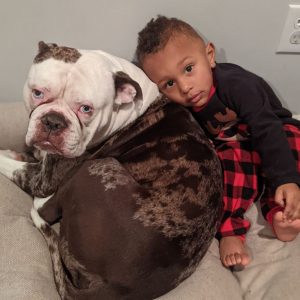
Known for being loyal, intelligent, and highly trainable, Alapahas make excellent family companions. They are possessive and attentive, establishing their territory at a young age and demanding attention. Not suited for kennel life, they thrive in an environment where they can interact with their families. They are naturally protective, wary of strangers, and benefit from early training and socialization. The breed is hardy, disease-resistant, and requires minimal grooming.
General Appearance
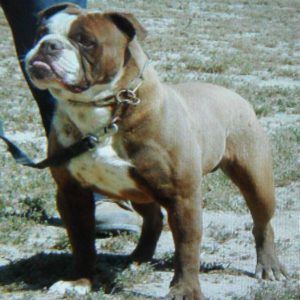
The Alapaha Blue-Blood Bulldog is a medium-sized, athletic dog with a strong, well-balanced build. It moves with power and determination, exuding strength relative to its size. The breed is agile, alert, and fearless without being overly aggressive.
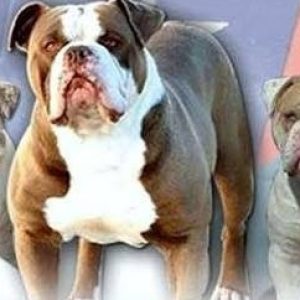
An Alapaha should not appear overly bulky or long-legged; instead, it should embody a compact yet powerful form. Males tend to be larger and more heavily boned than females. The breed’s coat is primarily white with patches of black, brown, red, and, on rare occasions, blue merle (harlequin). These patches may range from simple markings around the eyes and ears to more extensive saddle patterns.
Size
The breed was selectively bred for livestock catching, with medium size proving most effective for this task. Height and weight should be proportional.
- Males: 20 to 24 inches at the withers; 70 to 90 lbs.
- Females: 18 to 22 inches at the withers; 55 to 75 lbs.
Head
- Shape: Box-shaped, medium-length skull with pronounced muscular cheeks. The skull is flat on top, with a well-defined furrow between the eyes.
- Stop: Abrupt and deep.
Eyes
- Medium-sized and of any color.
- The haw (third eyelid) should not be visible.
- Black eye rims are preferred for white-coated dogs.
- Pink eye rims are considered a cosmetic fault.
Muzzle
- Medium-length (2 to 4 inches), square, and broad with a strong underjaw.
- Lips are full but not excessively loose.
- Bite: A definite undershot of 1/8 to 1/4 inch is preferred.
- Disqualifications: Scissors or even bite.
- Structural Faults: A muzzle under 2 inches or over 4 inches, fewer than 36 teeth, more than 1/4-inch undershot, small or uneven incisors.
Nose
- Black or liver-colored.
- Black-nosed dogs should have black lips, with some pink allowed.
- Fault: 50% or more light pigmentation.
Ears
- Shape & Placement: V-shaped or folded back, set high and wide, level with the occiput, giving a square skull appearance.
- Size: Small, with the tip of the ear aligning with the eye when alert.
- Fault: Rose ears.
- Disqualification: Cropped ears in the show ring.
Neck
- Muscular and medium in length, slightly arched.
- Slight dewlap allowed.
- The neck must be strong and of appropriate length to provide leverage and power in work.
Body
- Overall Shape: Square, robust, and powerful without exaggerated width.
- Chest: Deep with a well-sprung ribcage.
- Back: Medium-length, broad, and strong with a slight roach that slopes toward the stern.
- Loins: Slightly tucked.
Faults:
- Swayback.
- Narrow or shallow chest.
- Lack of tuck-up.
Hindquarters
- Broad, well-muscled, and proportional to the shoulders.
- Serious Fault: Narrow hips.
Legs & Feet
- Front Legs: Strong and straight with heavy bone. Set neither too close nor too far apart.
- Faults: Bowed elbows (in or out).
- Rear Legs: Should exhibit visible angulation at the stifle.
- Feet: Moderate size, well-arched toes, close together (not splayed).
- Pasterns: Strong, straight, and upright.
Movement
The Alapaha moves smoothly with agility, covering ground effortlessly. The hind legs should drive the dog forward with power, while the front legs maintain reach and balance.
- Topline: Firm and level, parallel to the line of motion.
- Head & Tail Carriage: Confident, proud, and alert.
Faults:
- Clumsy or rolling gait.
- Leg crossing or interference.
- Short, stilted strides.
- Twisting joints, paddling, weaving, or pacing.
Tail
- Long enough to reach the hocks, tapering to a point.
- Thick at the base, extending as a natural continuation of the spine.
- Carried above the back when moving or excited but should not curl over the back.
Disqualifications:
- Docked tails in the show ring.
- Kinked, crank, or screw tails that do not reach the hocks.
- More than one break in the tail.
Coat & Color
- Coat: Short, close, glossy, and stiff to the touch.
- Color: Preferred pattern is at least 50% white with patches of color (any shade of merle or brindle, solid blue, black, chocolate, red, fawn, seal, or tri-colored).
- All-white dogs are acceptable but require proper pigmentation to avoid genetic defects like deafness, blindness, or skin issues.
Disposition
- Alert and outgoing with a self-assured demeanor.
- Some aloofness with strangers and assertiveness toward other dogs is acceptable.
Disqualifications:
- Blindness or deafness.
- Males without two descended testicles.
- Shyness.
Faults & Judging Criteria
- Cosmetic Faults: Minor imperfections that do not impact the dog’s working ability.
- Structural Faults: Defects affecting the breed’s functionality, such as agility, endurance, and strength.
- Serious Faults: Any extreme deviation from the standard.
Point Breakdown for Judging
| Category | Points |
|---|---|
| Overall (Proportion & Temperament) | 20 |
| Head (Size, Muzzle, Teeth) | 20 |
| Body (Neck, Shoulders, Chest, Back, Hindquarters, Legs, Feet, Tail & Coat) | 60 |
| Total | 100 |
This refined standard maintains the breed’s rich history and functionality while improving readability and clarity. Let me know if you’d like further adjustments!